basics
How to Keep Feng Shui Practical in a Rental
Keep Feng Shui practical in a rental: see what the idea can explain, what it cannot prove, and when keep rental should stay context.
The short answer: 30-second decision
The Short Answer
Verdict: Name the room evidence for How to keep feng shui practical in a rental: if fixed architecture, outlet-locked desk placement, no-drill windows, shared-wall noise, temporary storage, or furniture blocking is not present, do not change the room yet.
First three checks, one action, one stop rule.
How to keep feng shui practical in a rental is worth acting on only when you can see fixed architecture, outlet-locked desk placement, no-drill windows, shared-wall noise, temporary storage, or furniture blocking and connect it to choosing reversible changes for support, path, light, storage, privacy, sound, and daily reset. The page's answer is to translate the concept into one visible room check before applying it, then test one low-risk change before adding objects, colors, or stronger claims. If the signal is absent, keep How to keep feng shui practical in a rental as context and move to a more specific room or method page.
How to keep feng shui practical in a rental visible signal / Daily use test / Smallest reversible move
Do not let How to keep feng shui practical in a rental turn into a full-room makeover. If several changes happen at once, the reader cannot tell which one helped normal use.
Move next to the room, tool, or method page that shows the concept in use, because a definition alone cannot tell the reader what to change. For How to keep feng shui practical in a rental, the next step should be chosen by which recommendation can be reversed cleanly and which one would violate the lease or create a maintenance problem, not by a generic related-articles list.
Start here when the idea sounds useful but still needs a visible home test.
Do not change the room yet when the pressure is not visible, the safer move is unclear, or the fix would add clutter, cost, safety risk, or worry.
Editor note: choose the next page by the room signal you can see, not by a promise, a symbol, or a rule that does not fit the space.
Test how to keep feng shui practical in a rental in an ordinary constraint, such as a 12-by-16 open-plan living room where the sofa floats because the only wall is needed for shelves and cables, where family members split the room duties, so the person who cleans it and the person who uses it most have different priorities and the room cannot move the main path because it must keep a 24-inch path for night movement, cleaning, children, guests, or accessibility.
The useful question is not whether the room matches a perfect diagram. It is whether which recommendation can be reversed cleanly and which one would violate the lease or create a maintenance problem, fixed architecture, outlet-locked desk placement, no-drill windows, shared-wall noise, temporary storage, or furniture blocking a path, and the rental constraint, movable furniture, lamp, curtain, rug, storage piece, command-position workaround, or no-drill adjustment still support the people who actually live with the space.
Smallest move: keep the furniture where it is and adjust light, clutter, reflection, or backing before treating how to keep feng shui practical in a rental as active.
Do not force it: do not continue if the person who uses the room most cannot explain what became easier after the adjustment.
- How to keep feng shui practical in a rental visible signal
Look for fixed architecture, outlet-locked desk placement, no-drill windows, shared-wall noise, temporary storage, or furniture blocking. If the signal cannot be pointed to in the room, the page should stay as learning context instead of becoming an action list.
- Daily use test
Watch how choosing reversible changes for support, path, light, storage, privacy, sound, and daily reset actually happens on an ordinary day. The right first move should make the routine easier without adding fear, clutter, or maintenance.
- Smallest reversible move
Choose the change that can be undone in minutes: a path clearing, angle shift, support improvement, light change, or calmer placement before any symbolic layer.
Start here only if name the visible clue shows up in the room. Then use if the idea points to a real room to decide whether this needs a layout change, a method check, or no action.
Avoid forced changes when the room already works, the issue is not visible, or the fix adds clutter, cost, safety risk, or worry.
Start by checking which recommendation can be reversed cleanly and which one would violate the lease or create a maintenance problem. If the issue is visible, choose one reversible move that makes choosing reversible changes for support, path, light, storage, privacy, sound, and daily reset easier before adding any symbolic layer.
Leave the rental constraint, movable furniture, lamp, curtain, rug, storage piece, command-position workaround, or no-drill adjustment alone when the room already works, the concern has no visible signal, or the change would add cost, clutter, safety risk, or anxiety.
Read the full page when you need to compare concept pages separate btb, form school, compass school, and annual methods when the distinction matters. with fixed architecture, outlet-locked desk placement, no-drill windows, shared-wall noise, temporary storage, or furniture blocking a path and the room's actual daily use.
When to act
Keep feng shui practical in a rental deserves action when the rental constraint, movable furniture, lamp, curtain, rug, storage piece, command-position workaround, or no-drill adjustment changes choosing reversible changes for support, path, light, storage, privacy, sound, and daily reset in a way the reader can see or feel. The strongest clue is fixed architecture, outlet-locked desk placement, no-drill windows, shared-wall noise, temporary storage, or furniture blocking a path, especially when it repeats during ordinary use instead of appearing only as a fear-based rule. Before acting, compare the clue with control, limitation, neighbor sound, temporary comfort, reset speed, and whether the room feels more usable without permanent work. If both the visual and felt signals point to the same friction, the page has a practical reason to guide a small change.
First move
Keep feng shui practical in a rental first move: turn the concept into one room observation before treating it as advice. The first move should improve which recommendation can be reversed cleanly and which one would violate the lease or create a maintenance problem. If that first check cannot be improved directly, choose a smaller adjustment that clarifies the path, support, light, storage, care routine, or room purpose. Record the current condition before the move, because a useful fix should make the next week easier to explain, not only more decorated.
When to leave it alone
Keep feng shui practical in a rental can be left alone when the room already works and the concern has no visible evidence. The idea should change what the reader notices about support, flow, timing, balance, or use. If that evidence is absent, keep the page as context and avoid adding a new object or rule. The do-nothing decision is especially strong when the rental constraint, movable furniture, lamp, curtain, rug, storage piece, command-position workaround, or no-drill adjustment already supports choosing reversible changes for support, path, light, storage, privacy, sound, and daily reset and the proposed change would add cleaning, cost, crowding, or worry.
For How to Keep Feng Shui Practical in a Rental, this page uses traditional Feng Shui context plus visible room observation. It is not a scientific guarantee, a promise of personal results, or a reason to ignore safety, lease rules, light, access, or daily use.
Feng Shui 101 language is treated as a traditional spatial vocabulary for How to keep feng shui practical in a rental, not as a prediction system.
The practical reading starts with which recommendation can be reversed cleanly and which one would violate the lease or create a maintenance problem. It then looks for this visible signal during normal use: fixed architecture, outlet-locked desk placement, no-drill windows, shared-wall noise, temporary storage, or furniture blocking a path.
School differences, compass readings, Bagua overlays, Kua directions, and annual timing are named when they matter, but they do not override visible room evidence.
This page is not evidence of wealth, health, relationship, career, fate, medical, legal, financial, or guaranteed personal outcomes.
Diagrams and room images are used to compare the rental constraint, movable furniture, lamp, curtain, rug, storage piece, command-position workaround, or no-drill adjustment, support, path, light, clutter, and maintenance before changing decor.
How to keep feng shui practical in a rental should lead to one observable room decision, not a blended rule made from every Feng Shui school at once.
The method page is an editorial policy; it is not a practitioner credential, client case study, certification, or scientific outcome study.How to keep feng shui practical in a rental is treated as a bounded educational topic: the page uses the reference to name the idea, then asks whether which recommendation can be reversed cleanly and which one would violate the lease or create a maintenance problem and fixed architecture, outlet-locked desk placement, no-drill windows, shared-wall noise, temporary storage, or furniture blocking a path are visible in the room.
The reference does not prove that how to keep feng shui practical in a rental creates wealth, health, relationship, career, fate, or any guaranteed personal outcome.How to Keep Feng Shui Practical in a Rental uses this reference to compare which recommendation can be reversed cleanly and which one would violate the lease or create a maintenance problem, fixed architecture, outlet-locked desk placement, no-drill windows, shared-wall noise, temporary storage, or furniture blocking a path, and the rental constraint, movable furniture, lamp, curtain, rug, storage piece, command-position workaround, or no-drill adjustment before recommending a small change.
This reference does not validate a personal reading, replace an on-site professional, or prove that the suggested action will create a guaranteed result.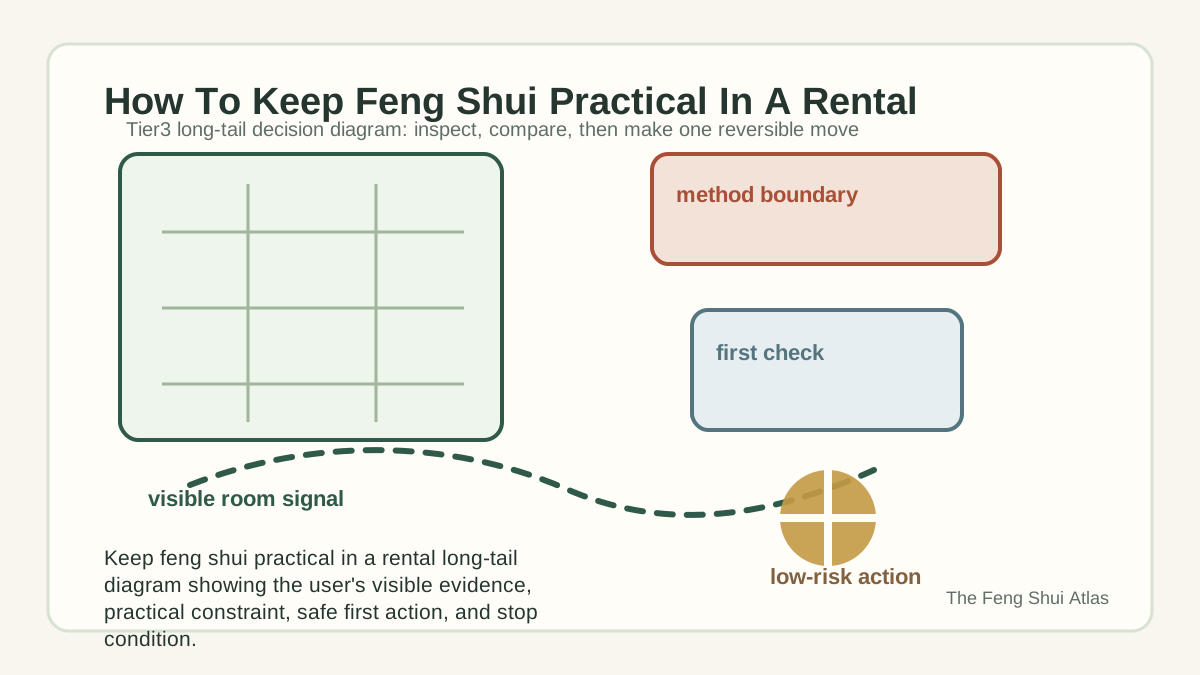
Choose Your Situation
For How to Keep Feng Shui Practical in a Rental, choose the situation that matches why you opened this page.
Use rental-safe How to keep adjustments
Lease rules, budget, or fixed doors shape the how to keep practical in decision.
Start here when lease rules, fixed doors, fixed outlets, shared walls, small rooms, no-paint limits, and temporary budgets makes the ideal version unrealistic.Room answer for How to keep practical inCheck the matching How to keep layout
A bed, desk, chair, door view, or anchor object changes choosing reversible changes for support, path, light, storage, privacy, sound, and daily reset.
Use the room guide when the rental constraint, movable furniture, lamp, curtain, rug, storage piece, command-position workaround, or no-drill adjustment changes choosing reversible changes for support, path, light, storage, privacy, sound, and daily reset.Quick fix for How to keep practical inRun the fastest How to keep check
One visible pressure around the rental constraint, movable furniture, lamp, curtain, rug, storage piece, command-position workaround, or no-drill adjustment needs a first move.
Use the tool only when it gives a bounded result for the visible room signal.Specific problem around How to keep practical inCompare the closest fix page
A mirror, door, beam, clutter point, line, or object keeps pulling attention.
Use the fix page when the visible problem matters more than the broad method.Annual check for How to keep practical inRead the annual sector carefully
The how to keep practical in question depends on year, sector, date range, or activity level.
Use annual guidance only after checking date and sector activity.Method first for How to keep practical inSeparate the method before acting
Two sources disagree or mix schools around how to keep practical in.
Use this before blending form, Bagua, compass, Kua, or annual advice.Editorial Note
Room moment
A reader usually notices how to keep feng shui practical in a rental during the moment a term starts to feel like a rule instead of a room observation: the reader notices control, limitation, neighbor sound, temporary comfort, reset speed, and whether the room feels more usable without permanent work around the rental constraint, movable furniture, lamp, curtain, rug, storage piece, command-position workaround, or no-drill adjustment during daily use in an ordinary room, while the room has to stay easy to clean because storage, laundry, toys, or work cables return every day.
Exception
If changing the rental constraint, movable furniture, lamp, curtain, rug, storage piece, command-position workaround, or no-drill adjustment would make choosing reversible changes for support, path, light, storage, privacy, sound, and daily reset harder, the better edit is restraint or a soft adjustment around the object.
Editor judgment
Editorial judgment: Treat the method note as useful only when it clarifies the next bed, desk, door, mirror, or storage decision.
Lived constraint check
Test how to keep feng shui practical in a rental in an ordinary constraint, such as a 12-by-16 open-plan living room where the sofa floats because the only wall is needed for shelves and cables, where family members split the room duties, so the person who cleans it and the person who uses it most have different priorities and the room cannot move the main path because it must keep a 24-inch path for night movement, cleaning, children, guests, or accessibility.
The useful question is not whether the room matches a perfect diagram. It is whether which recommendation can be reversed cleanly and which one would violate the lease or create a maintenance problem, fixed architecture, outlet-locked desk placement, no-drill windows, shared-wall noise, temporary storage, or furniture blocking a path, and the rental constraint, movable furniture, lamp, curtain, rug, storage piece, command-position workaround, or no-drill adjustment still support the people who actually live with the space.
Smallest move: keep the furniture where it is and adjust light, clutter, reflection, or backing before treating how to keep feng shui practical in a rental as active.
Do not force it: do not continue if the person who uses the room most cannot explain what became easier after the adjustment.
How To Read This Decision
The page turns How to keep feng shui practical in a rental into a room-level test before it becomes advice.
Translate The Term Into A Room Test
How to keep feng shui practical in a rental becomes useful only after the reader can connect it to which recommendation can be reversed cleanly and which one would violate the lease or create a maintenance problem. The page should make that translation before any advice appears.
Check What The Idea Can And Cannot Prove
Use the traditional frame as context, then separate it from guaranteed outcomes. The page can support observation and method clarity, not proof of fate, wealth, health, or relationship change.
Make One Small Test
If the term points to a visible issue, test one reversible change and watch whether one renter-safe adjustment improves the main routine and can be undone without damage. If nothing changes, undo the move and read a more specific room page.
Keep The Source Boundary Visible
Editorial method, Accessibility context, Qi term context helps anchor the explanation, but the final advice is rewritten around the reader's room, not copied from a general definition.
Turn The Idea Into A Room Check
how to keep feng shui practical in a rental depends on the doorway, main position, path, light, or image in this room.
How to keep feng shui practical in a rental becomes useful only after the reader can connect it to which recommendation can be reversed cleanly and which one would violate the lease or create a maintenance problem. The page should make that translation before any advice appears.
What To Verify First
Start here when you need to tell whether name the visible clue is present before treating how to keep feng shui practical in a rental as advice.
Understand what How to keep feng shui practical in a rental means, then decide whether it changes a real room observation instead of staying an abstract Feng Shui term.
- How to keep feng shui practical in a rental visible signal
Look for fixed architecture, outlet-locked desk placement, no-drill windows, shared-wall noise, temporary storage, or furniture blocking. If the signal cannot be pointed to in the room, the page should stay as learning context instead of becoming an action list.
- Daily use test
Watch how choosing reversible changes for support, path, light, storage, privacy, sound, and daily reset actually happens on an ordinary day. The right first move should make the routine easier without adding fear, clutter, or maintenance.
- Smallest reversible move
Choose the change that can be undone in minutes: a path clearing, angle shift, support improvement, light change, or calmer placement before any symbolic layer.
- Term-to-room translation
Before applying How to keep feng shui practical in a rental, say which school or method is being used and which part of the room it changes. If that sentence is vague, keep reading before acting.
Practical Ways To Apply It
Use these moves only after the issue is visible and one small how to keep feng shui practical in a rental adjustment makes sense before decor.
- Best first move
Keep feng shui practical in a rental works best when the first move is practical: Choose one room where the idea changes a decision, then test it against the door view, support, light, or path. This is the strongest first move because it changes which recommendation can be reversed cleanly and which one would violate the lease or create a maintenance problem before asking the reader to believe a symbolic claim. Make the move small enough to reverse in one session. Then check whether the room is easier to enter, use, maintain, or settle before considering a second layer.
- If the idea stays abstract
Keep feng shui practical in a rental still has a plain-English answer: When the idea stays abstract, write the room condition in plain English and skip any change that cannot be seen or felt. The goal is not to force an ideal version of the topic, but to reduce the part that makes choosing reversible changes for support, path, light, storage, privacy, sound, and daily reset feel harder than it needs to be. When doors, windows, budget, ownership, or shared use block the perfect answer, the best fix is the one that removes one daily irritation without creating a new one.
- Plain-English version
Keep feng shui practical in a rental should stay low-risk when the ideal version is unavailable. A plain-English version can still make progress by naming the rental constraint, movable furniture, lamp, curtain, rug, storage piece, command-position workaround, or no-drill adjustment, the room condition, and the decision that actually changes. The change should be reversible and easy to explain. Before buying anything, try a placement edit, cleaning reset, lighting shift, closing habit, softer edge, or clearer path. If that improves use, the page has already done its job. When it does not improve use, stop and diagnose again instead of escalating into a larger purchase.
Method Boundary
Keep feng shui practical in a rental needs this method boundary: Concept pages should keep the definition tied to a visible room condition. Concept pages separate BTB, form school, compass school, and annual methods when the distinction matters. That means the advice can suggest a cautious spatial experiment around the rental constraint, movable furniture, lamp, curtain, rug, storage piece, command-position workaround, or no-drill adjustment, but it should not promise money, health, love, career, or fate outcomes. When a reader wants stronger certainty, the honest next step is to check which school is being used, what evidence the room actually shows, and whether a qualified practitioner would need personal context.
Where Beginners Overreach
Pause here if the next move would add cost, fear, clutter, or method-mixing around how to keep feng shui practical in a rental.
- Changing too many things
Do not let How to keep feng shui practical in a rental turn into a full-room makeover. If several changes happen at once, the reader cannot tell which one helped normal use.
- Treating symbolism as proof
A symbol, number, sector, or old phrase can frame attention, but it does not prove a guaranteed result for health, money, relationships, or luck.
- Using the term without a room
The weak version of How to keep feng shui practical in a rental explains vocabulary but never says what to observe. Keep the term tied to one doorway, seat, bed, path, light, or object.
Where To Go After This
Choose from here when the page diagnosis is clear and you need the next room, method, tool, or caution path.
Move next to the room, tool, or method page that shows the concept in use, because a definition alone cannot tell the reader what to change. For How to keep feng shui practical in a rental, the next step should be chosen by which recommendation can be reversed cleanly and which one would violate the lease or create a maintenance problem, not by a generic related-articles list.
- If the idea points to a real room
Keep feng shui practical in a rental points to a room or problem guide when it shows up as physical friction. The useful comparison is the door, path, support, light, and storage issue the reader can actually see. If the rental constraint, movable furniture, lamp, curtain, rug, storage piece, command-position workaround, or no-drill adjustment blocks movement, weakens support, adds glare, traps clutter, or makes the room harder to reset, the better follow-up is the guide that diagnoses that room condition before adding a new method. The next click should match the visible friction, not the most dramatic promise.
- If sources disagree
Keep feng shui practical in a rental becomes a basics or culture follow-up when the real issue is method confusion. The reader first needs to name whether form, Bagua, compass, Kua, annual timing, or cultural meaning is shaping the advice. If two sources give different instructions, the method labels should be compared before anything moves. That keeps a room-form fix, a calendar note, and a translation point from collapsing into one confusing instruction. The practical checkpoint is simple: if the source label changes the recommendation, read the method page before changing the room; if it does not, keep the physical observation in charge.
- If the next move should stay small
Keep feng shui practical in a rental can stay in a quick tool path when the reader needs a decision more than another long guide. One reversible change around the rental constraint, movable furniture, lamp, curtain, rug, storage piece, command-position workaround, or no-drill adjustment is enough; several fixes stacked together make the first result impossible to read. If the reader has only ten minutes, the useful move is a note, photo, clearing pass, light adjustment, or path check. After that, whether one renter-safe adjustment improves the main routine and can be undone without damage should decide whether a deeper guide is worth opening.
Sources and Image Notes
- Editorial basis: Feng Shui 101 language is treated as a traditional spatial vocabulary for How to keep feng shui practical in a rental, not as a prediction system. The practical reading starts with which recommendation can be reversed cleanly and which one would violate the lease or create a maintenance problem. It then looks for this visible signal during normal use: fixed architecture, outlet-locked desk placement, no-drill windows, shared-wall noise, temporary storage, or furniture blocking a path. School differences, compass readings, Bagua overlays, Kua directions, and annual timing are named when they matter, but they do not override visible room evidence. Diagrams and room images are used to compare the rental constraint, movable furniture, lamp, curtain, rug, storage piece, command-position workaround, or no-drill adjustment, support, path, light, clutter, and maintenance before changing decor. It is not evidence of wealth, health, relationship, career, fate, medical, legal, financial, or guaranteed personal outcomes.
- Reader fit: Keep feng shui practical in a rental targets readers who want a direct answer, a visible diagnosis, practical fixes, clear method boundaries, and enough cultural context to avoid fear-based advice.
- Reference anchors: Chinese term definitions and English-language Feng Shui school explanations; Room-form examples that show door view, support, path, light, and clutter.
- Scope check: Keep feng shui practical in a rental is supported by definition checks, method-family comparisons, and room examples that keep the term practical. The page does not claim a private practitioner reading or a measured outcome study. Keep feng shui practical in a rental evidence asks readers to verify which recommendation can be reversed cleanly and which one would violate the lease or create a maintenance problem for this specific feng shui 101 topic, then compare that with fixed architecture, outlet-locked desk placement, no-drill windows, shared-wall noise, temporary storage, or furniture blocking a path and control, limitation, neighbor sound, temporary comfort, reset speed, and whether the room feels more usable without permanent work.
- Visual source: Original site diagram. Keep feng shui practical in a rental long-tail diagram showing the user's visible evidence, practical constraint, safe first action, and stop condition.
- Image boundary: It does not show a real client home, measured before-after evidence, practitioner approval, or a promised personal result.
References used for this page
Editorial method
Used for: Explains how this site separates traditional context, modern room observation, images, tools, and limits for How to keep feng shui practical in a rental.
This page takes: How to keep feng shui practical in a rental should lead to one observable room decision, not a blended rule made from every Feng Shui school at once.
Cannot prove: The method page is an editorial policy; it is not a practitioner credential, client case study, certification, or scientific outcome study.
Accessibility context
Used for: Checks the public term or tradition context before how to keep feng shui practical in a rental becomes advice about the rental constraint, movable furniture, lamp, curtain, rug, storage piece, command-position workaround, or no-drill adjustment.
This page takes: How to keep feng shui practical in a rental is treated as a bounded educational topic: the page uses the reference to name the idea, then asks whether which recommendation can be reversed cleanly and which one would violate the lease or create a maintenance problem and fixed architecture, outlet-locked desk placement, no-drill windows, shared-wall noise, temporary storage, or furniture blocking a path are visible in the room.
Cannot prove: The reference does not prove that how to keep feng shui practical in a rental creates wealth, health, relationship, career, fate, or any guaranteed personal outcome.
Qi term context
Used for: Names the method or cultural lens that can shape how to keep feng shui practical in a rental without turning it into a universal rule. Used when energy vocabulary needs a cultural-language boundary before practical observation.
This page takes: How to Keep Feng Shui Practical in a Rental uses this reference to compare which recommendation can be reversed cleanly and which one would violate the lease or create a maintenance problem, fixed architecture, outlet-locked desk placement, no-drill windows, shared-wall noise, temporary storage, or furniture blocking a path, and the rental constraint, movable furniture, lamp, curtain, rug, storage piece, command-position workaround, or no-drill adjustment before recommending a small change.
Cannot prove: This reference does not validate a personal reading, replace an on-site professional, or prove that the suggested action will create a guaranteed result.
Universal design context
Used for: Keeps how to keep feng shui practical in a rental grounded in room function, planning, light, circulation, material, care, or maintenance. Used when access, safety, movement, shared households, or practical constraints should outrank symbolism.
This page takes: How to Keep Feng Shui Practical in a Rental uses this reference to compare which recommendation can be reversed cleanly and which one would violate the lease or create a maintenance problem, fixed architecture, outlet-locked desk placement, no-drill windows, shared-wall noise, temporary storage, or furniture blocking a path, and the rental constraint, movable furniture, lamp, curtain, rug, storage piece, command-position workaround, or no-drill adjustment before recommending a small change.
Cannot prove: This reference does not validate a personal reading, replace an on-site professional, or prove that the suggested action will create a guaranteed result.
Why these sources fit this page
Keep feng shui practical in a rental method boundary
Supports: Concept pages separate BTB, form school, compass school, and annual methods when the distinction matters. It supports the page's cautious choice to separate tradition, method family, and practical room observation before giving advice.
Cannot prove: It does not prove a personal result, settle disagreement between schools, or replace a practitioner who can measure and inspect the home.
Keep feng shui practical in a rental visible room evidence
Supports: The page tests the idea against which recommendation can be reversed cleanly and which one would violate the lease or create a maintenance problem, fixed architecture, outlet-locked desk placement, no-drill windows, shared-wall noise, temporary storage, or furniture blocking a path, and the way the rental constraint, movable furniture, lamp, curtain, rug, storage piece, command-position workaround, or no-drill adjustment affects ordinary household use.
Cannot prove: It is an editorial observation framework for a modern home, not a controlled study of wealth, health, love, career, or fate.