Choose the path that matches the view from the main position and the path people use when entering or crossing the room; skip the rest until the situation changes.
rooms
Room Guides
Room Guides starts with daily use, not symbolism. Choose the room that creates the most friction, check its main position, door view, light, support, and path, then make one change that the household can actually test.
Choose by the decision in front of you
Open the path that matches the visible room signal or learning gap; skip the rest until it becomes useful.
Use this when sleep feels exposed or unsettled.
Bedroom and bed position
First check door view, headboard support, and mirror lines.
Use this when the home feels unclear on arrival.Front door and entry flow
First check the first three steps after entering.
Use this when work feels distracted.Home office focus
First check desk backing, door view, glare, and cables.
Use this when the kitchen feels tense or cluttered.Kitchen stove and sink
First check stove access, sink relationship, and prep path.
Use this when the ideal layout is blocked.Small apartment or rental
First check fixed doors, lease limits, and multi-use zones.
Use this when shoes, bags, or walls block arrival.Calm entryway reset
First check storage, light, and the welcome path.
What This Page Helps You Decide
The reader is choosing among several Room Guides paths and needs the hub to sort by visible situation instead of by a long list of similar articles.
Room Guides should help the reader choose a narrower path. Start with the view from the main position and the path people use when entering or crossing the room, then open only the guide, tool, or method note that matches the visible signal. The hub is written to prevent broad browsing from turning into a list of disconnected Feng Shui tips.
Identify whether Room Guides is answering a room problem, a tool need, a method question, or an annual timing question before opening another page.
Do not let Room Guides turn into a full-room makeover. If several changes happen at once, the reader cannot tell which one helped normal use.
Core reader path
Reader Questions This Page Answers
Room guides answers a reader who wants the page to be faster than a long article and more careful than a quick rule. Start with the view from the main position and the path people use when entering or crossing the room, compare whether the anchor piece has support, enough breathing space, and a readable relationship to the door, choose one reversible action, and leave the room alone when the signal is not present.
Room guides should first answer a room-first answer for support, door view, path, light, and routine. The useful answer is not a larger promise; it is the smallest room decision that becomes clearer after checking the view from the main position and the path people use when entering or crossing the room.
Use the page when whether the anchor piece has support, enough breathing space, and a readable relationship to the door appears during ordinary use. If the signal is absent, the topic can stay as context and the reader should avoid changing the room only because the phrase sounds important.
Room guides now includes a practical first action, a visual comparison, FAQ-style objections, and source context. That makes the page useful for quick decisions while preserving the longer explanation below.
an ideal diagram cannot override rent, safety, access, or daily use. The page can support observation, vocabulary, and low-risk adjustment; it cannot verify luck, money, health, relationships, career, fate, or a guaranteed before-after effect.
Room guides needs a visual that clarifies the view from the main position and the path people use when entering or crossing the room, whether the anchor piece has support, enough breathing space, and a readable relationship to the door, and the first low-risk action. The image or diagram should make the decision easier to inspect, not decorate the article.
Use the visual beside one real observation from the doorway or main position. If the image does not match the room, keep it as a checklist for door, anchor object, path, light, support, and constraint.
Room guides can support vocabulary, traditional context, visual room observation, and one reversible home decision around the bed, desk, sofa, stove, table, door, window, or storage zone that anchors the room. It cannot turn that support into proof of a personal result, and it should still show why another method page or tool may be needed.
It cannot prove wealth, health, luck, relationship, career, fate, or a before-after outcome. It also cannot override building rules, safety, accessibility, lease limits, or professional judgment.
What should I check first for Room guides?
Start from the view from the main position and the path people use when entering or crossing the room, then compare door view, support, walking path, light, storage, and the room's main routine. For Room guides, the first move should make the room easier to use before it looks more symbolic. Stand in the doorway, then sit or stand where the room is normally used. If whether the anchor piece has support, enough breathing space, and a readable relationship to the door is not visible from either place, keep reading but avoid rearranging the room today.
Can Room guides work in a rental or small room?
Yes, if the Room guides change stays reversible and respects door swings, outlets, windows, rental rules, shared use, and furniture that may not fit the ideal layout. Use a light shift, clearer path, steadier backing, softer view, or storage reset before drilling, repainting, buying large objects, or forcing an ideal layout. A rental-friendly version should improve placing the main furniture so the room supports sleeping, working, eating, entering, or gathering without asking for construction, permanent hardware, or a layout the household cannot keep. If the small move helps, no larger cure is needed.
HomeReturn to the room-first starting point when the hub feels broad.Room Flow ChecklistTurn this topic into a practical room checklist. Use it after checking the view from the main position and the path people use when entering or crossing the room for Room guides, so the next click answers a real room decision instead of sending the reader into generic browsing.Problem FixesCompare this topic with the next related learning area. Use it after checking the view from the main position and the path people use when entering or crossing the room for Room guides, so the next click answers a real room decision instead of sending the reader into generic browsing.Bedroom and bed positionThe highest-intent room layout entry. Use it before choosing the next page.Front door and entry flowEntry pages shape many next choices. Use it after checking the view from the main position and the path people use when entering or crossing the room for Room guides, so the next click answers a real room decision instead of sending the reader into generic browsing.
Choose Your Situation
For Room Guides, choose the situation that matches why you opened this page.
Renting with Room guides
Use rental-safe Room guides adjustments
Lease rules, budget, or fixed doors shape the room guides decision.
Start here when door swings, outlets, windows, rental rules, shared use, and furniture that may not fit the ideal layout makes the ideal version unrealistic.Room layout for Room guidesCheck the matching Room guides layout
A bed, desk, chair, door view, or anchor object changes placing the main furniture so the room supports sleeping, working, eating, entering, or gathering.
Use the room guide when the bed, desk, sofa, stove, table, door, window, or storage zone that anchors the room changes placing the main furniture so the room supports sleeping, working, eating, entering, or gathering.Quick fix for Room guidesRun the fastest Room guides check
One visible pressure around the bed, desk, sofa, stove, table, door, window, or storage zone that anchors the room needs a first move.
Use the tool only when it gives a bounded result for the visible room signal.Specific room problem around Room guidesCompare the closest fix page
A mirror, door, beam, clutter point, line, or object keeps pulling attention.
Use the fix page when the visible problem matters more than the broad method.Annual check for Room guidesRead the annual sector carefully
The room guides question depends on year, sector, date range, or activity level.
Use annual guidance only after checking date and sector activity.Method first for Room guidesSeparate the method before acting
Two sources disagree or mix schools around room guides.
Use this before blending form, Bagua, compass, Kua, or annual advice.Before You Change Anything
Use this page like a careful directory, helping readers choose one real question instead of browsing every article. Start with room guides as a real room question before moving into theory. The practical room signal, Feng Shui method, and cultural boundary should stay close together so the reader does not have to chase separate tips.
Room situation
The reader is likely standing inside a lived-in room with fixed doors, furniture, light, storage, and a main daily activity, trying to make placing the main furniture so the room supports sleeping, working, eating, entering, or gathering feel less confusing while the bed, desk, sofa, stove, table, door, window, or storage zone that anchors the room keeps pulling attention. They need a first check they can see, not another abstract promise about luck.
Likely question
The likely question is practical and skeptical: the visitor wants a direct answer, a visible room diagnosis, one low-risk next move, and enough method context to avoid fear-based or shopping-first advice.
Why this guide helps
Room Guides helps because it starts near a common entry point: the view from the main position and the path people use when entering or crossing the room. It can send readers toward the right room guide, tool, source note, or cultural explanation without pretending that one page can replace a full consultation.
Visual check
Use the diagram as a concrete visual anchor for the bed, desk, sofa, stove, table, door, window, or storage zone that anchors the room. It should help the reader compare the view from the main position and the path people use when entering or crossing the room, whether the anchor piece has support, enough breathing space, and a readable relationship to the door, and the suggested room or tool action without implying a guaranteed outcome.
Manual checks
- The answer starts with a visible room signal before symbolic interpretation.
- The method boundary names the Feng Shui school or assumption shaping the advice.
- The next step is reversible and observable during ordinary home use.
- The source and visual notes explain what the page can and cannot prove.
Source anchors
- Room guides method boundary: supports Room pages use practical form-school reasoning first, then note when Bagua or compass methods change the reading. It supports the page's choice to name the method before giving advice. Limitation: It does not prove a personal result, replace a practitioner reading, or make every Feng Shui school agree.
- Room guides room-use evidence: supports The page's practical reading starts with the view from the main position and the path people use when entering or crossing the room. It then looks for this visible signal during ordinary use: whether the anchor piece has support, enough breathing space, and a readable relationship to the door. Limitation: It is a home-observation standard, not a measured study of money, health, relationships, career, or fate.
- Room guides safety and constraint boundary: supports The low-risk action is limited by door swings, outlets, windows, rental rules, shared use, and furniture that may not fit the ideal layout, accessibility, rental rules, maintenance, and the room's real function. Limitation: It does not override building codes, medical advice, accessibility needs, fire safety, lease rules, or professional judgment.
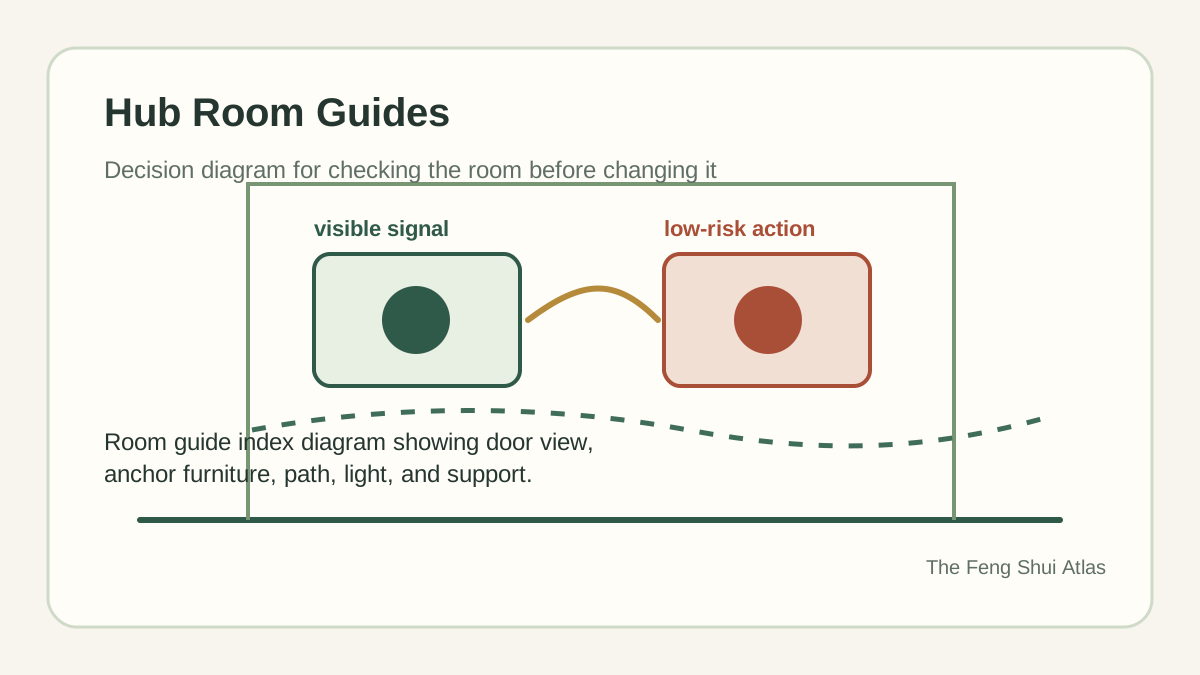
- top30-hub-room-guides visual source: supports Room guide index diagram showing door view, anchor furniture, path, light, and support. It supports visual comparison before the reader moves furniture or decor. Limitation: It is an editorial diagram or contextual image, not a before-after proof, client case study, or guaranteed outcome.
Editorial Note
Room moment
In practice, room guides shows up in the doorway view before anyone moves the anchor furniture: the reader notices light, sound, glare, cold air, clutter, and whether the room feels calm during its main activity around the bed, desk, sofa, stove, table, door, window, or storage zone that anchors the room during daily use in an ordinary room, while a desk, bed, mirror, plant, or cabinet is already doing two jobs in the same room.
Exception
If the household cannot point to whether the anchor piece has support, enough breathing space, and a readable relationship to the door, keep room guides as context rather than a task for the room.
Editor judgment
Editorial judgment: Prefer the fix that a reader can undo without regret after observing whether the room is easier to enter, use, and reset after one ordinary day in the actual room.
Lived constraint check
Test room guides in an ordinary constraint, such as a 10-by-12 work corner where the desk cannot face the door without screen glare, where two people use the same chair, mirror, cabinet, or doorway at different times of day and the anchor piece cannot move without breaking the safer walking path or creating a worse reflection line.
The useful question is not whether the room matches a perfect diagram. It is whether the view from the main position and the path people use when entering or crossing the room, whether the anchor piece has support, enough breathing space, and a readable relationship to the door, and the bed, desk, sofa, stove, table, door, window, or storage zone that anchors the room still support the people who actually live with the space.
Smallest move: mark the doorway view, clear one 24-inch path, and test a lamp, screen, textile, or storage reset before moving anchor furniture.
Do not force it: undo the change if after a week the room is prettier but no easier to use, clean, enter, sit, sleep, cook, or work in.
Source and Method Check
For Room Guides, this page uses traditional Feng Shui context plus visible room observation. It is not a scientific guarantee, a promise of personal results, or a reason to ignore safety, lease rules, light, access, or daily use.
Room Guides language is treated as a traditional spatial vocabulary for Room guides, not as a prediction system.
The practical reading starts with the view from the main position and the path people use when entering or crossing the room. It then looks for this visible signal during normal use: whether the anchor piece has support, enough breathing space, and a readable relationship to the door.
School differences, compass readings, Bagua overlays, Kua directions, and annual timing are named when they matter, but they do not override visible room evidence.
This page is not evidence of wealth, health, relationship, career, fate, medical, legal, financial, or guaranteed personal outcomes.
Diagrams and room images are used to compare the bed, desk, sofa, stove, table, door, window, or storage zone that anchors the room, support, path, light, clutter, and maintenance before changing decor.
References used for this pagesite methodEditorial method encyclopediaLighting context cultural referenceChinese architecture context design referenceWayfinding context visual sourceOriginal visual method note
Room guides should lead to one observable room decision, not a blended rule made from every Feng Shui school at once.
The method page is an editorial policy; it is not a practitioner credential, client case study, certification, or scientific outcome study.Room guides is treated as a bounded educational topic: the page uses the reference to name the idea, then asks whether the view from the main position and the path people use when entering or crossing the room and whether the anchor piece has support, enough breathing space, and a readable relationship to the door are visible in the room.
The reference does not prove that room guides creates wealth, health, relationship, career, fate, or any guaranteed personal outcome.Room Guides uses this reference to compare the view from the main position and the path people use when entering or crossing the room, whether the anchor piece has support, enough breathing space, and a readable relationship to the door, and the bed, desk, sofa, stove, table, door, window, or storage zone that anchors the room before recommending a small change.
This reference does not validate a personal reading, replace an on-site professional, or prove that the suggested action will create a guaranteed result.Room Guides uses this reference to compare the view from the main position and the path people use when entering or crossing the room, whether the anchor piece has support, enough breathing space, and a readable relationship to the door, and the bed, desk, sofa, stove, table, door, window, or storage zone that anchors the room before recommending a small change.
This reference does not validate a personal reading, replace an on-site professional, or prove that the suggested action will create a guaranteed result.The selected image supports room guides because it gives the reader a visual anchor for the method or room pattern discussed here. The image helps the reader compare a doorway view, pressure line, anchor object, or maintenance cue before changing the room.
The visual is a reading aid, not a real client before-after record, practitioner endorsement, measured effect, or promised result.What this hub is for
Browse room guides and choose one practical Feng Shui question that matches a real room or learning need.
For modern homes, this hub turns room guides into readable diagrams, cautious explanations, and practical alternatives for renters or fixed layouts.
What This Page Helps You Decide
Room guides is written for a reader who needs one practical decision, not a mystical diagnosis. It starts with the view from the main position and the path people use when entering or crossing the room, uses the bed, desk, sofa, stove, table, door, window, or storage zone that anchors the room as the visible anchor, and ends with a low-risk next step that can be observed in normal use.
Reference anchors
- Room layout observation: main position, door relationship, support, walking path, and light
- Home-design usability checks for storage, furniture scale, maintenance, and glare
- Feng Shui method caveats that keep form reading separate from Bagua or compass overlays
Decision path
- Confirm the room signal
Look for whether the anchor piece has support, enough breathing space, and a readable relationship to the door. If the signal is not visible in the room, keep the page as background reading instead of changing furniture or decor.
- Name the method
Room pages use practical form-school reasoning first, then note when Bagua or compass methods change the reading. This prevents the page from mixing a form-school room fix with Bagua, compass, Kua, or annual advice without saying so.
- Choose one reversible move
The useful action should improve placing the main furniture so the room supports sleeping, working, eating, entering, or gathering around the bed, desk, sofa, stove, table, door, window, or storage zone that anchors the room. Try one change, watch whether the room is easier to enter, use, and reset after one ordinary day, then decide whether deeper reading is needed.
Room Answer
Room Guides starts with daily use, not symbolism. Choose the room that creates the most friction, check its main position, door view, light, support, and path, then make one change that the household can actually test.
Room Situation
Room guides usually becomes useful after the room has stopped feeling theoretical. The reader is usually trying to handle placing the main furniture so the room supports sleeping, working, eating, entering, or gathering, while the bed, desk, sofa, stove, table, door, window, or storage zone that anchors the room keeps pulling attention back to the same spot. A careful reading starts with the view from the main position and the path people use when entering or crossing the room. Then it asks whether one small change can make the space easier to use for a few ordinary days. The page stays strongest when the cultural idea, the visible room condition, and the practical next move all remain connected.
What to Notice
- Visible room signal
The first sign for Room guides is whether the anchor piece has support, enough breathing space, and a readable relationship to the door. The useful question is whether the issue can be seen from the entrance, main seat, work position, bed, or walking path without inventing a hidden meaning.
- Daily-use signal
Daily life gives Room guides its weight. If the bed, desk, sofa, stove, table, door, window, or storage zone that anchors the room repeatedly interrupts sleep, work, cooking, entry, gathering, study, or care, the issue is more than a decorative preference.
- Sensory signal
With Room guides, the felt clue is light, sound, glare, cold air, clutter, and whether the room feels calm during its main activity. Feng Shui language often points to pressure, exposure, dead space, harsh brightness, stale corners, or a room that never settles into its intended role.
- Constraint signal
The limit around Room guides matters before the fix. Door swings, outlets, windows, rental rules, shared use, and furniture that may not fit the ideal layout can change the best answer, so reversible adjustments come before expensive furniture moves, renovation, or symbolic purchases.
Layout Decision
Room guides: act only when the issue changes how the room is actually used. The practical test links the bed, desk, sofa, stove, table, door, window, or storage zone that anchors the room with the view from the main position and the path people use when entering or crossing the room, then asks whether the issue affects placing the main furniture so the room supports sleeping, working, eating, entering, or gathering. A change that only sounds symbolic is not enough. Visibility, support, movement, light, maintenance, and calm should improve in some observable way. Room pages use practical form-school reasoning first, then note when Bagua or compass methods change the reading.
Method Context
In traditional Feng Shui, room guides belongs to a wider relationship between qi, form, direction, activity, and timing. Room pages use practical form-school reasoning first, then note when Bagua or compass methods change the reading.
How to apply it in a real room
For modern homes, this hub turns room guides into readable diagrams, cautious explanations, and practical alternatives for renters or fixed layouts.
When the room will not cooperate
If the ideal arrangement is not possible, use the page's alternative step and keep the limitation visible.
Cultural Note
The hub keeps Chinese spatial terms connected to practical English examples instead of flattening them into decoration tips.
Diagram Note
Hub diagram showing how Room Guides pages connect to tools and related concepts.
Practical Steps
- Trace the room path
Room guides: make a quick field note before anything moves. Trace placing the main furniture so the room supports sleeping, working, eating, entering, or gathering, then mark where the bed, desk, sofa, stove, table, door, window, or storage zone that anchors the room creates friction, exposure, crowding, glare, or confusion in the room.
- Choose the smallest useful move
The improvement for Room guides is usually one small, visible adjustment. The best candidate improves the view from the main position and the path people use when entering or crossing the room: a clearer path, stronger backing, softer line, healthier light, tidier surface, or better door relationship.
- Name the Feng Shui lens
Method labels keep Room guides honest. Form-school guidance, BTB Bagua, compass direction, Kua number, and annual Flying Star notes can lead to different priorities, so the advice should not collapse into one absolute rule.
- Observe before adding more
A short waiting period protects Room guides from becoming busywork. The change should reveal whether the room is easier to enter, use, and reset after one ordinary day, and it should make the room easier to use, maintain, and explain without fear or promises.
- Document the reason
A plain note keeps Room guides grounded after the move. Record what felt blocked, exposed, noisy, heavy, dim, or unsupported, and what the adjustment is meant to improve. That keeps the advice in the room rather than in shopping language.
Method Boundaries
- What this page can say
Room guides can support a careful reading of form, use, direction, timing, material, or cultural meaning. It can suggest a spatial experiment and explain why that experiment belongs to a particular Feng Shui method.
- What this page should not promise
The boundary is firm for Room guides: the bed, desk, sofa, stove, table, door, window, or storage zone that anchors the room should not become a claim about money, health, relationships, career, or fate. A calmer room choice is fair to describe; a proved life outcome is not.
- When another method may disagree
Another school may read Room guides differently. A compass reading, BTB Bagua overlay, annual sector reading, or deeper practitioner assessment can shift the priority, so the lowest-risk physical change remains the best first move.
Constraint-Friendly Fix
The fixed-layout version of Room guides still has options. A rental, shared room, small apartment, or inherited layout can usually accept a smaller repair: clarify the main function, reduce the strongest visual pressure, improve lighting, add stable support, or create a cleaner path around the bed, desk, sofa, stove, table, door, window, or storage zone that anchors the room. When even that is hard, the daily routine can change first. Reset the surface, open the window when possible, repair what is broken, or remove one object that competes with the room's main purpose.
Common Mistakes
- Opening several room guides pages without choosing the method or room condition being tested first.
- Treating a symbol, color, sector, or object as the whole answer before checking support, flow, light, and daily use.
- Skipping the practical room problem and collecting advice that cannot be turned into one clear next step.
Practical Example
Room guides can feel sharper in a small apartment because the bed, desk, sofa, stove, table, door, window, or storage zone that anchors the room has to serve more than one role. A careful first move would be to clear the route, adjust the angle or lighting, add a more stable visual backing, and then observe whether the room is easier to enter, use, and reset after one ordinary day. That example matters because it does not ask the reader to rebuild the home or buy a symbolic object before understanding the room. It also keeps Room guides connected to this boundary: form-school room reading comes first before Bagua or compass additions change the interpretation.
Questions Readers Usually Ask
What should I check first for Room guides?
The first check for Room guides is the view from the main position and the path people use when entering or crossing the room. If the issue is not visible in the room's main use, it may be secondary. If it affects sleep, focus, entry, cooking, gathering, maintenance, or calm, it deserves a practical Feng Shui reading. Before making a change, compare that first check with whether the anchor piece has support, enough breathing space, and a readable relationship to the door and light, sound, glare, cold air, clutter, and whether the room feels calm during its main activity. When those signals agree, choose one small adjustment and record whether the room becomes easier to use for a week.
Can Room guides be handled without buying anything?
Without shopping, Room guides can still change. Clearing a path, moving a small object, improving light, softening a harsh line, creating support, or changing a routine may answer the room problem before decor enters the conversation. If the issue is tied to the bed, desk, sofa, stove, table, door, window, or storage zone that anchors the room, start with what already exists in the room. A good no-buy test should be reversible, visible, and specific enough that the household can tell what improved and what did not.
Which Feng Shui method matters most here?
Method choice for Room guides depends on context. Shape, support, and movement point toward form-school reasoning. Life areas, directions, personal numbers, or yearly sectors require the Bagua, compass, Kua, or annual caveats before acting. If the methods point in different directions, do not combine every suggestion. Name the method first, choose the lowest-risk physical move, and avoid claims that the room will guarantee a personal outcome. When uncertain, start with the method that improves visible room use before symbolic interpretation.
Can Room guides work in a rental or small room?
Yes, if the Room guides change stays reversible and respects door swings, outlets, windows, rental rules, shared use, and furniture that may not fit the ideal layout. Use a light shift, clearer path, steadier backing, softer view, or storage reset before drilling, repainting, buying large objects, or forcing an ideal layout. A rental-friendly version should improve placing the main furniture so the room supports sleeping, working, eating, entering, or gathering without asking for construction, permanent hardware, or a layout the household cannot keep. If the small move helps, no larger cure is needed.
Careful Boundary
Room guides is presented here as part of a traditional Chinese spatial practice for education and lifestyle planning, not as a promise of financial, health, relationship, career, or personal outcomes. Before changing a room, check the view from the main position and the path people use when entering or crossing the room, then compare it with whether the anchor piece has support, enough breathing space, and a readable relationship to the door and the way the room is actually used. If a suggestion conflicts with safety, building rules, accessibility, medical advice, or professional judgment, choose the practical requirement first. Treat the page as context when the bed, desk, sofa, stove, table, door, window, or storage zone that anchors the room already supports placing the main furniture so the room supports sleeping, working, eating, entering, or gathering.
Sources and Image Notes
- Editorial basis: Room Guides language is treated as a traditional spatial vocabulary for Room guides, not as a prediction system. The practical reading starts with the view from the main position and the path people use when entering or crossing the room. It then looks for this visible signal during normal use: whether the anchor piece has support, enough breathing space, and a readable relationship to the door. School differences, compass readings, Bagua overlays, Kua directions, and annual timing are named when they matter, but they do not override visible room evidence. Diagrams and room images are used to compare the bed, desk, sofa, stove, table, door, window, or storage zone that anchors the room, support, path, light, clutter, and maintenance before changing decor. It is not evidence of wealth, health, relationship, career, fate, medical, legal, financial, or guaranteed personal outcomes.
- Reader fit: Room guides targets readers who want a direct answer, a visible diagnosis, practical fixes, clear method boundaries, and enough cultural context to avoid fear-based advice.
- Reference anchors: Room layout observation: main position, door relationship, support, walking path, and light; Home-design usability checks for storage, furniture scale, maintenance, and glare; Feng Shui method caveats that keep form reading separate from Bagua or compass overlays.
- Visual source: Original site diagram. Room guide index diagram showing door view, anchor furniture, path, light, and support.
- Image boundary: It does not show a real client home, a measured before-after proof, or a promised personal outcome.
References used for this page
Editorial method
Used for: Explains how this site separates traditional context, modern room observation, images, tools, and limits for Room guides.
This page takes: Room guides should lead to one observable room decision, not a blended rule made from every Feng Shui school at once.
Cannot prove: The method page is an editorial policy; it is not a practitioner credential, client case study, certification, or scientific outcome study.
Lighting context
Used for: Checks the public term or tradition context before room guides becomes advice about the bed, desk, sofa, stove, table, door, window, or storage zone that anchors the room.
This page takes: Room guides is treated as a bounded educational topic: the page uses the reference to name the idea, then asks whether the view from the main position and the path people use when entering or crossing the room and whether the anchor piece has support, enough breathing space, and a readable relationship to the door are visible in the room.
Cannot prove: The reference does not prove that room guides creates wealth, health, relationship, career, fate, or any guaranteed personal outcome.
Chinese architecture context
Used for: Names the method or cultural lens that can shape room guides without turning it into a universal rule. Used when room guidance touches entry sequence, courtyard thinking, shelter, threshold, or support.
This page takes: Room Guides uses this reference to compare the view from the main position and the path people use when entering or crossing the room, whether the anchor piece has support, enough breathing space, and a readable relationship to the door, and the bed, desk, sofa, stove, table, door, window, or storage zone that anchors the room before recommending a small change.
Cannot prove: This reference does not validate a personal reading, replace an on-site professional, or prove that the suggested action will create a guaranteed result.
Wayfinding context
Used for: Keeps room guides grounded in room function, planning, light, circulation, material, care, or maintenance. Used when entry sequence, route clarity, hallway flow, or movement through a room matters.
This page takes: Room Guides uses this reference to compare the view from the main position and the path people use when entering or crossing the room, whether the anchor piece has support, enough breathing space, and a readable relationship to the door, and the bed, desk, sofa, stove, table, door, window, or storage zone that anchors the room before recommending a small change.
Cannot prove: This reference does not validate a personal reading, replace an on-site professional, or prove that the suggested action will create a guaranteed result.
Original visual method note
Used for: Keeps the visual attached to Room guides, the bed, desk, sofa, stove, table, door, window, or storage zone that anchors the room, support, path, light, and the specific room signal described on this page.
This page takes: The selected image supports room guides because it gives the reader a visual anchor for the method or room pattern discussed here. The image helps the reader compare a doorway view, pressure line, anchor object, or maintenance cue before changing the room.
Cannot prove: The visual is a reading aid, not a real client before-after record, practitioner endorsement, measured effect, or promised result.
Why these sources fit this page
Room guides method boundary
Supports: Room pages use practical form-school reasoning first, then note when Bagua or compass methods change the reading. It supports the page's choice to name the method before giving advice.
Cannot prove: It does not prove a personal result, replace a practitioner reading, or make every Feng Shui school agree.
Room guides room-use evidence
Supports: The page's practical reading starts with the view from the main position and the path people use when entering or crossing the room. It then looks for this visible signal during ordinary use: whether the anchor piece has support, enough breathing space, and a readable relationship to the door.
Cannot prove: It is a home-observation standard, not a measured study of money, health, relationships, career, or fate.
Room guides safety and constraint boundary
Supports: The low-risk action is limited by door swings, outlets, windows, rental rules, shared use, and furniture that may not fit the ideal layout, accessibility, rental rules, maintenance, and the room's real function.
Cannot prove: It does not override building codes, medical advice, accessibility needs, fire safety, lease rules, or professional judgment.
top30-hub-room-guides visual source
Supports: Room guide index diagram showing door view, anchor furniture, path, light, and support. It supports visual comparison before the reader moves furniture or decor.
Cannot prove: It is an editorial diagram or contextual image, not a before-after proof, client case study, or guaranteed outcome.
Suggested next checks
Use these paths when the hub is too broad and you need one concrete room, tool, or method decision.
Next check
Home
Return to the room-first starting point when the hub feels broad.
Next checkRoom Flow Checklist
Turn this topic into a practical room checklist.
Next checkProblem Fixes
Compare this topic with the next related learning area.
Next checkBedroom and bed position
The highest-intent room layout entry. Use it before choosing the next page.
Next checkFront door and entry flow
Entry pages shape many next choices.
Next checkHome office focus
Connects room form to a daily task.
Next checkKitchen stove and sink
Keeps kitchen guidance practical. Use it before choosing the next page.
Next checkSmall apartment or rental
Handles real constraints before symbolism. Use it before choosing the next page.
Next checkCalm entryway reset
A concrete room-first repair path. Use it before choosing the next page.
Next checkHow to Use Symbols Without Overbuying
Use this supporting long-tail guide to compare how to use symbols without overbuying with the current page before choosing a broader method or tool.
Next checkHow to Keep Feng Shui Practical in a Rental
Use this supporting long-tail guide to compare how to keep feng shui practical in a rental with the current page before choosing a broader method or tool.
Next checkHow to Build a First Feng Shui Checklist
Use this supporting long-tail guide to compare how to build a first feng shui checklist with the current page before choosing a broader method or tool.
Guides in this area
Open one page that matches the room, question, or method you are actually using today.
Feng Shui Bedroom Layout: Where to Place Your BedroomsHome Office Feng Shui for Focus and Career FlowroomsFront Door Feng Shui: How Energy Enters Your HomeroomsKitchen Feng Shui: Stove, Sink, and NourishmentroomsLiving Room Feng Shui: Sofa, Flow, and Family HarmonyroomsBathroom Feng Shui: Common Problems and Practical FixesroomsFeng Shui for Kids' Rooms and Study AreasroomsFeng Shui for Small Apartments and RentalsroomsFeng Shui for Studio ApartmentsroomsFeng Shui for a Shared BedroomroomsFeng Shui for Guest RoomsroomsFeng Shui for Dining RoomsroomsFeng Shui for HallwaysroomsFeng Shui for StaircasesroomsFeng Shui for Laundry RoomsroomsFeng Shui for Closets and StorageroomsFeng Shui for BalconiesroomsGarden Feng Shui: Pathways, Water, and Protective PlantsroomsTiny Desk Corner Feng Shui: Desk Placement ChecksroomsFeng Shui for Open Plan LivingroomsFeng Shui for Basement RoomsroomsFeng Shui for Attic RoomsroomsFeng Shui for a North Facing RoomroomsFeng Shui for a South Facing RoomroomsFeng Shui for a Dark RoomroomsFeng Shui for a Room With Many DoorsroomsFeng Shui for a Room With Sloped CeilingsroomsFeng Shui for a Long Narrow RoomroomsFeng Shui for a Room Above a GarageroomsFeng Shui for a Room Near StairsroomsFeng Shui for a Room With Exposed BeamsroomsFeng Shui for a Room With Large WindowsroomsFeng Shui for a Rental BedroomroomsFeng Shui for a Work From Home NookroomsFeng Shui for an Airbnb Guest SpaceroomsFeng Shui for a Calm Entrywayrooms
Useful tools
Use a tool when you need a bounded result before reading more guides.
Tool
Room Flow Checklist
Use the room flow checklist to spot door view, support, clutter, and light issues, then choose the guide that matches the strongest signal.
ToolBagua Map Explainer
Place a Bagua map over the floor plan, check which sector matches the decision, and keep the result tied to visible room use.
ToolKua Number Calculator
Calculate a Kua number for orientation notes, then compare the result with the room's door view, desk or bed position, and method limits.
ToolAnnual Flying Star Map
Map the annual flying star layer by year and sector, then keep the result bounded by real room activity and quiet reversible changes.