Pick one visible room problem first, then choose the matching tool, hub, or detail guide.
200guide and tool URLs
4client-side tools
0saved personal inputs
Choose Your Situation
Pick the reason you came here; each path starts with one room decision and avoids broad browsing.
I am renting
Use rental-safe Feng Shui
Walls, doors, lease rules, or budget block the ideal move.
I only want bedroomCheck bed placement
Sleep feels exposed, mirrors distract, or the door line is awkward.
I have a mirror problemRead the mirror fix first
A mirror reflects the bed, door, light, or movement and keeps pulling attention.
I am checking the yearRead the yearly map
The question depends on 2026 timing, sectors, and activity level.
Quick repairRun a checklist
You want one low-risk move before reading a long guide.
I want the method firstSeparate the schools
Different sources disagree and you need to know why.
What The Atlas Helps You Decide
The reader has a room question but does not yet know whether to start with a layout check, a method explanation, a tool, or a specific fix.
Start with the room or decision that is already bothering you, then use the atlas only as far as it helps you make one reversible change. The useful path is not the longest path: choose a room check, a method explanation, a tool result, or an annual note only when it matches a visible home signal.
Identify whether The Feng Shui Atlas is answering a room problem, a tool need, a method question, or an annual timing question before opening another page.
The next step should be the route that narrows the reader's current situation: a checklist for uncertainty, a room guide for visible friction, a method guide for conflicting advice, or an annual page for time-bound sector questions.
Core reader path
Reader Questions This Page Answers
Feng Shui guide answers a reader who wants the page to be faster than a long article and more careful than a quick rule. Start with the first room a guest sees and the room the household uses most often, compare whether the eye can understand the entry, main seat, work surface, or bed without strain, choose one reversible action, and leave the room alone when the signal is not present.
Feng Shui guide should first answer a fast orientation that separates definitions, room rules, tools, and cultural limits. The useful answer is not a larger promise; it is the smallest room decision that becomes clearer after checking the first room a guest sees and the room the household uses most often.
Use the page when whether the eye can understand the entry, main seat, work surface, or bed without strain appears during ordinary use. If the signal is absent, the topic can stay as context and the reader should avoid changing the room only because the phrase sounds important.
Feng Shui guide now includes a practical first action, a visual comparison, FAQ-style objections, and source context. That makes the page useful for quick decisions while preserving the longer explanation below.
the atlas cannot prove luck or personal outcomes; it can organize safer room checks. The page can support observation, vocabulary, and low-risk adjustment; it cannot verify luck, money, health, relationships, career, fate, or a guaranteed before-after effect.
Feng Shui guide needs a visual that clarifies the first room a guest sees and the room the household uses most often, whether the eye can understand the entry, main seat, work surface, or bed without strain, and the first low-risk action. The image or diagram should make the decision easier to inspect, not decorate the article.
Use the visual beside one real observation from the doorway or main position. If the image does not match the room, keep it as a checklist for door, anchor object, path, light, support, and constraint.
Feng Shui guide can support vocabulary, traditional context, visual room observation, and one reversible home decision around the room that creates the most daily friction. It cannot turn that support into proof of a personal result, and it should still show why another method page or tool may be needed.
It cannot prove wealth, health, luck, relationship, career, fate, or a before-after outcome. It also cannot override building rules, safety, accessibility, lease limits, or professional judgment.
What are the main rules of Feng Shui for a home?
The main rules are door flow, a supported main position, clear walking paths, usable light, manageable clutter, and one method at a time. The atlas treats those rules as room checks, not as promises about personal outcomes.
What does Feng Shui literally mean?
Feng Shui is commonly translated as wind-water. On this site that translation stays cultural context; the practical work is to compare the idea with the way a room receives movement, light, support, and daily use.
Start HereUse this first when the visitor is new to Feng Shui.Room Flow ChecklistTurn the first room choice into a checklist result. Use it after checking the first room a guest sees and the room the household uses most often for Feng Shui guide, so the next click answers a real room decision instead of sending the reader into generic browsing.Feng Shui 101Explain the concepts behind practical room guidance. Use it after checking the first room a guest sees and the room the household uses most often for Feng Shui guide, so the next click answers a real room decision instead of sending the reader into generic browsing.Sofa Without a Wall Behind It: Support FixesUse this supporting long-tail guide to compare sofa without a wall behind it support fixes with the current page before choosing a broader method or tool.Long Hallway Qi: How to Slow the FlowUse this supporting long-tail guide to compare long hallway qi how to slow the flow with the current page before choosing a broader method or tool.
Room-First Method
The practical clue is The feng shui atlas, especially in a whole home where the reader is trying to choose the first useful room question. The reader is usually trying to handle moving from curiosity to one small spatial decision, while the room that creates the most daily friction keeps pulling attention back to the same spot. A careful reading starts with the first room a guest sees and the room the household uses most often. Then it asks whether one small change can make the space easier to use for a few ordinary days. The page stays strongest when the cultural idea, the visible room condition, and the practical next move all remain connected.
The feng shui atlas: act only when the issue changes how the room is actually used. The practical test links the room that creates the most daily friction with the first room a guest sees and the room the household uses most often, then asks whether the issue affects moving from curiosity to one small spatial decision. A change that only sounds symbolic is not enough. Visibility, support, movement, light, maintenance, and calm should improve in some observable way. General beginner guidance that explains when a page uses BTB, form school, compass, or annual Flying Star framing.
Before You Change Anything
Use this as the orientation page: it should quickly show that the atlas is a room-first guide, not a generic tip archive. Start with the feng shui atlas as a real room question before moving into theory. The practical room signal, Feng Shui method, and cultural boundary should stay close together so the reader does not have to chase separate tips.
Room situation
The reader is likely standing inside a whole home where the reader is trying to choose the first useful room question, trying to make moving from curiosity to one small spatial decision feel less confusing while the room that creates the most daily friction keeps pulling attention. They need a first check they can see, not another abstract promise about luck.
Likely question
The likely question is practical and skeptical: the visitor wants a direct answer, a visible room diagnosis, one low-risk next move, and enough method context to avoid fear-based or shopping-first advice.
Why this guide helps
The Feng Shui Atlas helps because it starts near a common entry point: the first room a guest sees and the room the household uses most often. It can send readers toward the right room guide, tool, source note, or cultural explanation without pretending that one page can replace a full consultation.
Visual check
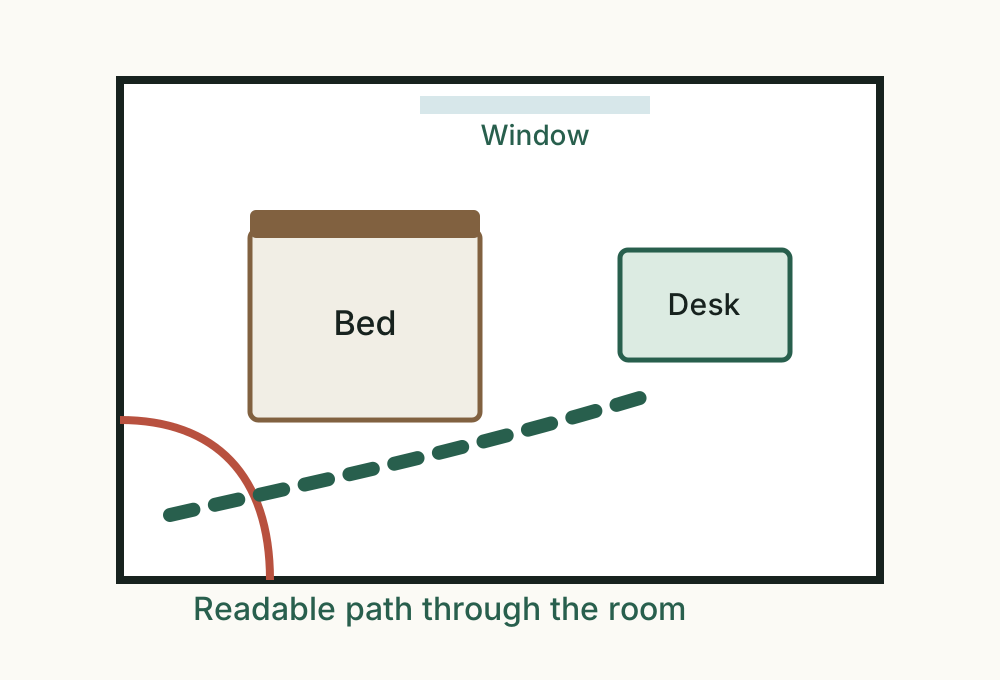
Use the diagram as a concrete visual anchor for the room that creates the most daily friction. It should help the reader compare the first room a guest sees and the room the household uses most often, whether the eye can understand the entry, main seat, work surface, or bed without strain, and the suggested room or tool action without implying a guaranteed outcome.
Manual checks
- The answer starts with a visible room signal before symbolic interpretation.
- The method boundary names the Feng Shui school or assumption shaping the advice.
- The next step is reversible and observable during ordinary home use.
- The source and visual notes explain what the page can and cannot prove.
Source anchors
- The feng shui atlas method boundary: supports General beginner guidance that explains when a page uses BTB, form school, compass, or annual Flying Star framing. It supports the page's choice to name the method before giving advice. Limitation: It does not prove a personal result, replace a practitioner reading, or make every Feng Shui school agree.
- The feng shui atlas room-use evidence: supports The page's practical reading starts with the first room a guest sees and the room the household uses most often. It then looks for this visible signal during ordinary use: whether the eye can understand the entry, main seat, work surface, or bed without strain. Limitation: It is a home-observation standard, not a measured study of money, health, relationships, career, or fate.
- The feng shui atlas safety and constraint boundary: supports The low-risk action is limited by limited time, mixed advice, and uncertainty about which Feng Shui school is being used, accessibility, rental rules, maintenance, and the room's real function. Limitation: It does not override building codes, medical advice, accessibility needs, fire safety, lease rules, or professional judgment.
- top30-home-atlas-map visual source: supports Editorial map linking room questions, tools, method boundaries, and low-risk next actions. It supports visual comparison before the reader moves furniture or decor. Limitation: It is an editorial diagram or contextual image, not a before-after proof, client case study, or guaranteed outcome.
Most Common Starting Paths
Choose the path that matches the decision in front of you, then ignore the rest until it becomes useful.
Sleep
Fix a bedroom first
Start with bed view, backing, door line, mirrors, and one calm change that can be tested for a week.
ProblemCheck a specific layout issue
Use this when one object, door, mirror, beam, or clutter point keeps pulling attention.
MethodUnderstand the Bagua
Read this before applying life-area advice so the overlay method is not mixed with compass guidance.
YearRead the annual map carefully
Use annual guidance only after checking date boundaries, sector use, and whether the change is low-risk.
What To Notice First
Start with signals that can be seen, felt, and changed in an ordinary home.
Visible room signal
The first sign for The feng shui atlas is whether the eye can understand the entry, main seat, work surface, or bed without strain. The useful question is whether the issue can be seen from the entrance, main seat, work position, bed, or walking path without inventing a hidden meaning.
Daily-use signal
Daily life gives The feng shui atlas its weight. If the room that creates the most daily friction repeatedly interrupts sleep, work, cooking, entry, gathering, study, or care, the issue is more than a decorative preference.
Sensory signal
With The feng shui atlas, the felt clue is light level, clutter pressure, noise, stale corners, and blocked walking lines. Feng Shui language often points to pressure, exposure, dead space, harsh brightness, stale corners, or a room that never settles into its intended role.
Constraint signal
The limit around The feng shui atlas matters before the fix. Limited time, mixed advice, and uncertainty about which Feng Shui school is being used can change the best answer, so reversible adjustments come before expensive furniture moves, renovation, or symbolic purchases.
Practical boundary
Start with one room change that can be observed.
The fixed-layout version of The feng shui atlas still has options. A rental, shared room, small apartment, or inherited layout can usually accept a smaller repair: clarify the main function, reduce the strongest visual pressure, improve lighting, add stable support, or create a cleaner path around the room that creates the most daily friction. When even that is hard, the daily routine can change first. Reset the surface, open the window when possible, repair what is broken, or remove one object that competes with the room's main purpose.
Choose a Tool
Each tool shows assumptions, method boundaries, and a next learning path.
Tool
Room Flow Checklist
Use the room flow checklist to spot door view, support, clutter, and light issues, then choose the guide that matches the strongest signal.
ToolBagua Map Explainer
Place a Bagua map over the floor plan, check which sector matches the decision, and keep the result tied to visible room use.
ToolKua Number Calculator
Calculate a Kua number for orientation notes, then compare the result with the room's door view, desk or bed position, and method limits.
ToolAnnual Flying Star Map
Map the annual flying star layer by year and sector, then keep the result bounded by real room activity and quiet reversible changes.
Browse the Atlas
Hubs are organized by the decision a reader needs to make, not by product promises.
basics
Feng Shui 101
Start Feng Shui 101 with one visible room check, one method boundary, and a reason to change the space or leave it alone.
roomsRoom Guides
Choose a room guide by the problem you can see first: door view, support, light, clutter, desk setup, or a room that feels hard to arrange.
fixesProblem Fixes
Find a Feng Shui fix by naming the visible trigger first: reflection, blocked entry, beam, clutter, glare, or an exposed desk or bed.
tools-hubFeng Shui Tools
Choose a Feng Shui tool: pick the checklist, Bagua, Kua, or annual tool that matches the decision, then open the guide for a tool.
annualAnnual Feng Shui
Plan annual Feng Shui by checking year, sector, and room activity, then keep changes quiet, reversible, and separate from permanent Bagua.
designDesign Inspiration
Choose Feng Shui design ideas by checking color weight, light, plant care, material upkeep, and whether the room still works.
cultureCulture Library
Terms and culture should keep source context, school language, translation limits, modern room evidence, and overclaim boundaries visible.
learningLearning Path
Careful Feng Shui learning: choose the next study step, practice one room observation, and respect what a short guide cannot teach.
Method first
Not every Feng Shui page is using the same school.
Room pages begin with practical form and activity. Bagua pages explain the overlay method. Annual pages keep date boundaries visible. That separation helps readers make a smaller, clearer change.
Open the Bagua guide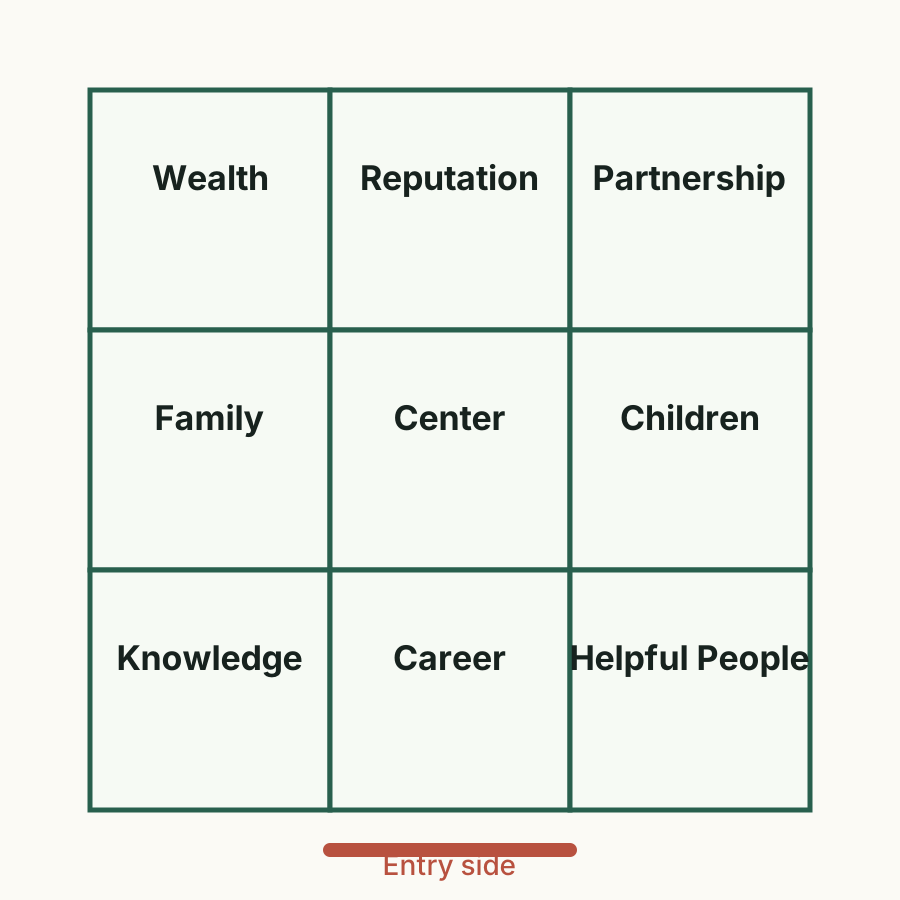
Sample Guides
Representative pages from the first 200 URL set.
What Is Feng Shui? A Practical Beginner's GuidebasicsQi in Feng Shui: What It Means for Your HomebasicsBagua Map Over a Floor Plan: 9 Areas Without Mixing MethodsbasicsFive Elements in Feng Shui: Colors, Shapes, and MaterialsbasicsFeng Shui Bedroom Layout: Where to Place Your BedroomsHome Office Feng Shui for Focus and Career FlowroomsFront Door Feng Shui: How Energy Enters Your HomeroomsKitchen Feng Shui: Stove, Sink, and NourishmentroomsMirror Facing the Bed: Feng Shui Meaning and FixesfixesBed Under a Window: Meaning and FixesfixesBed Facing the Door: Command Position FixesfixesBathroom in the Wealth Corner: What to Dofixes