The Feng Shui AtlasRoom-first Feng Shui

Practical guide

Small Entryway Drop Zone Without a Shoe Cabinet

A narrow entrance does not need a full shoe cabinet to work well. It needs a clear threshold, one dependable landing surface, a small footwear limit, and a reset that can be completed in a few minutes without blocking the door.

Quick answer

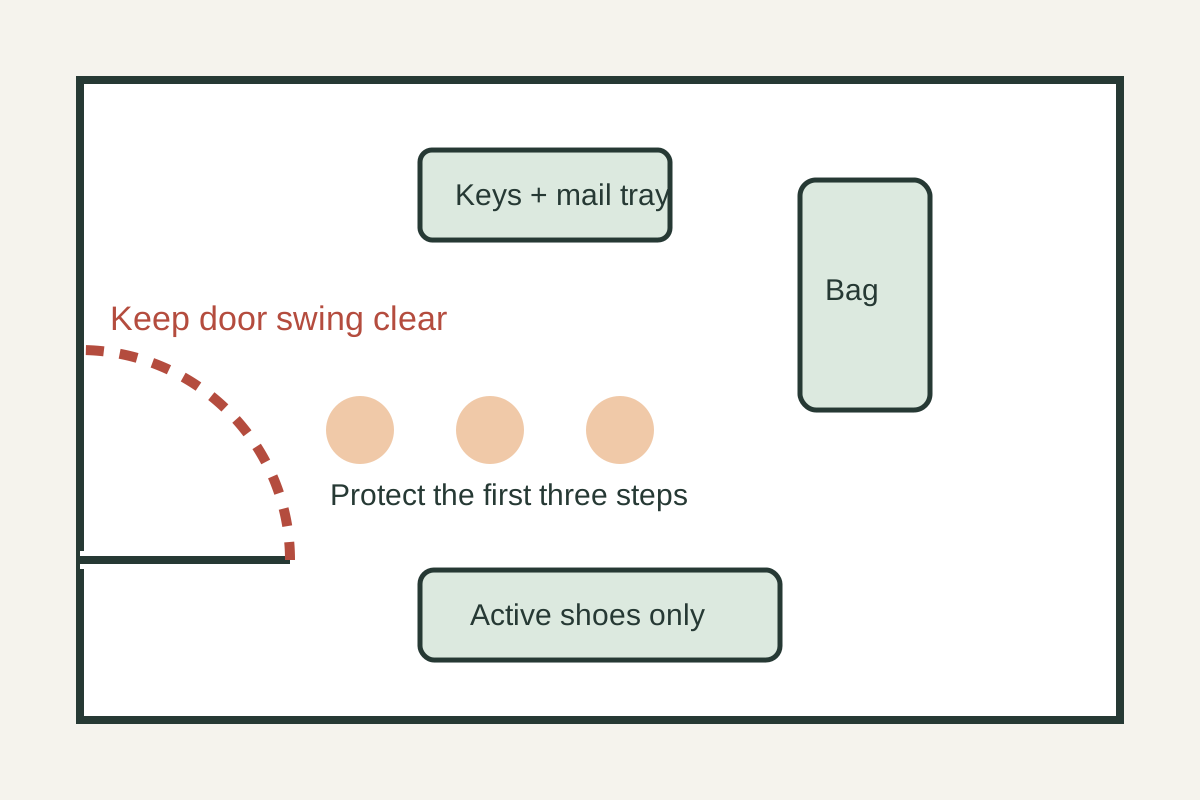
Open the door fully and mark its swing, then protect the first three walking steps. Give keys and mail one shallow tray, give daily bags one hook outside the door swing, and limit shoes to the pairs in current rotation. Put overflow elsewhere. Keep the arrangement only if arrival, departure, and the five-minute reset all become easier.

Top-down small entryway plan with a clear door swing, protected first steps, key tray, bag position, and active-shoe mat.
The diagram directly maps the page task and shows storage outside the door swing without claiming one universal layout. Original Feng Shui Atlas diagram, CC0.

Measure the door swing before adding storage

Open the front door to its normal widest position and trace the space used by the door edge, handle, lock, and the person entering with a bag. The threshold and lock must stay reachable. A hook, basket, or narrow rack that fits against the wall can still fail if it catches the handle, narrows the turn, or forces someone to close the door before setting anything down.

Mark the protected floor area with removable tape for one evening. Walk in carrying groceries, an umbrella, or a work bag. Walk out while collecting keys and shoes. The useful drop zone begins outside the door swing and outside the first clear step. This practical form-school reading treats movement and support as visible conditions before adding any symbolic interpretation of the entrance.

Separate the landing surface from the shoe limit

Keys, mail, and small daily objects need a raised landing surface so they do not disappear into footwear. Use one shallow wall shelf, narrow console corner, or stable tray placed beyond the handle and shoulder path. Keep its job narrow: small objects arriving in the hand. If the surface becomes a place for unopened parcels, decor, and unrelated storage, the entrance loses its readable handoff.

Shoes need a separate limit rather than a promise that all footwear will fit at the door. Choose a small washable mat or low open rack for the pairs used now. Move seasonal, formal, sports, and backup shoes to another closet or under-bed container. The decision is not about hiding every shoe; it is about preventing the active pairs from spreading into the walking path.

Give bags and coats one reachable vertical place

Place hooks where a person can reach them after stepping fully inside, not while standing in the doorway. Check that hanging bags do not project into face or shoulder height and that coats do not cover a switch, intercom, vent, or mirror. In a rental, use a tested removable rail or an over-door option only when it does not interfere with the door seal and hardware.

Set a quantity limit that matches the wall and the household. One daily bag per person is easier to reset than a row of occasional totes. Heavy backpacks need properly fixed support rather than a light adhesive hook. If safe mounting is uncertain, use a stable floor basket beyond the walking line and keep the load low enough that the container cannot tip.

Use a five-minute reset as the real test

At the end of the day, return keys to the tray, place active shoes on the mat, hang the daily bag, recycle obvious paper, and move overflow to its long-term storage. Time the reset once. If it takes longer than five minutes, the entrance may be carrying too many categories or the storage is too far from the action that creates the clutter.

Repeat the same reset for a week before buying another organizer. Watch which object is repeatedly left in the path and why: no reachable hook, wet footwear, outgoing parcels, child-height needs, or a storage limit that is too small for the household. Solve the repeated handoff rather than adding a decorative object to cover the symptom.

Keep welcome and symbolism subordinate to function

Feng Shui discussions often describe the entrance as a transition where qi enters the home. Use that cultural framing as a reminder to notice approach, light, welcome, and movement, not as proof that a tray or shoe arrangement produces luck, wealth, health, or another personal outcome. The observable result is whether people can enter, see, set down, and continue without collision or confusion.

Add one visual resting point only after the routine works: a clean wall, small artwork, lamp, or healthy plant that does not narrow the passage or increase difficult upkeep. A sparse entrance is not automatically calm, and a decorated entrance is not automatically welcoming. Keep the item only when it supports orientation and the space remains easy to reset.
Compare the options

QuestionFirst optionSecond optionTakeaway
Where should keys land?A shallow wall shelf or tray beyond the door handle.A deep basket mixed with mail, shoes, and bags.Choose the small surface that keeps keys visible and easy to clear.
How many shoes stay?Pairs used in the current week on one mat or low rack.Every pair owned by the household.Use rotation as the limit when a cabinet is unavailable.
Where should bags go?A properly supported hook or stable basket beyond the swing.The floor inside the first walking step.Protect the path before maximizing storage.
When is another organizer justified?After a one-week reset shows one repeated storage gap.Immediately after one cluttered evening.Buy for a repeated handoff, not for a temporary pile.

Checklist

Door swing
The door, handle, lock, and person carrying a bag can move without striking storage.
First steps
The first three walking steps remain free of shoes, parcels, cords, and unstable objects.
Small-object landing
Keys and mail have one shallow, reachable surface outside the shoulder path.
Active shoe limit
Only current-use pairs stay at the entrance; overflow has another home.
Bag support
Hooks or baskets match the weight, height, wall condition, and household routine.
Reset
One person can restore the entry in five minutes without moving furniture.

Working notes

Arrival friction
Record the first object or movement that interrupts entry.
Example: Work bag falls in the door swing because the only hook is behind the open door.
Protected area
Write the door swing and first three steps that must remain empty.
Example: Thirty-inch swing plus the left-side step toward the kitchen.
One-week observation
Track the item that repeatedly misses its place and the reason.
Example: Wet shoes need a washable tray; dry pairs already fit the mat.
Keep or reverse
Compare arrival, departure, and reset after the smallest change.
Example: Keep the tray; move the bag hook because it catches coat sleeves.

References

  • Feng Shui basics

    International Feng Shui Guild. Modern practice vocabulary and room-observation context. Use this as cultural and method context, not as scientific proof or a promised personal outcome.

  • Taoism overview

    World History Encyclopedia. Historical context for balance and change in Chinese thought. Use this as cultural and method context, not as scientific proof or a promised personal outcome.

  • Book of Changes

    Chinese Text Project. Primary-text context for change and relational interpretation. Use this as cultural and method context, not as scientific proof or a promised personal outcome.

Next pages

  • Feng Shui entryway checklist

    Use the broader threshold, lighting, sightline, and storage review when the landing zone is only one part of the entry.

  • Calm entryway guide

    Review the complete arrival routine and first-view conditions after the drop zone is working.

  • Front door blocked by shoes

    Use this when footwear already prevents the door or walking path from working safely.

  • Dark entryway fixes

    Separate a lighting problem from a storage problem before adding organizers.

  • Entry rug placement

    Choose a washable floor boundary without narrowing the first steps.

  • Room flow checklist

    Check movement, support, access, and maintenance with the new landing zone in place.

  • Start here

    Return to one visible problem and one reversible change if the entrance plan becomes too complicated.